
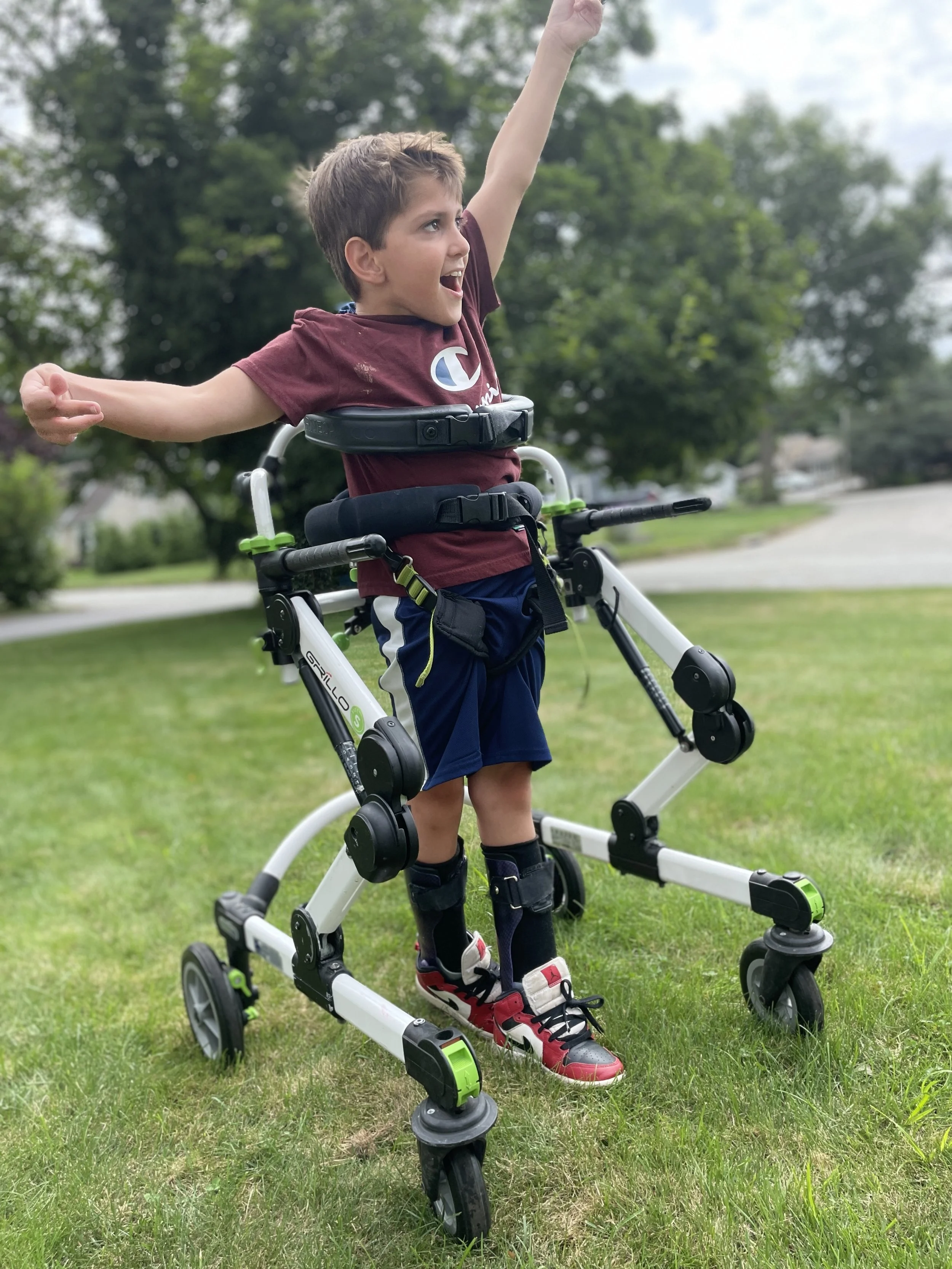
Tools, Equipment
& Protective Devices
Please note: The information provided in this section is for educational purposes only and is not intended to be a substitute for professional medical advice, diagnosis, or treatment. Always seek the advice of your physician or other qualified health provider with any questions you may have regarding a medical condition.
Suggested First Steps
Health Tips
Therapies
Tools & Equipment
You are here (read below)
Behavior Management
Teeth Removal
“Ignore the Behaviors, not the individual”
Tools, Protective Devices & Equipment for Families Living with Classic Lesch-Nyhan
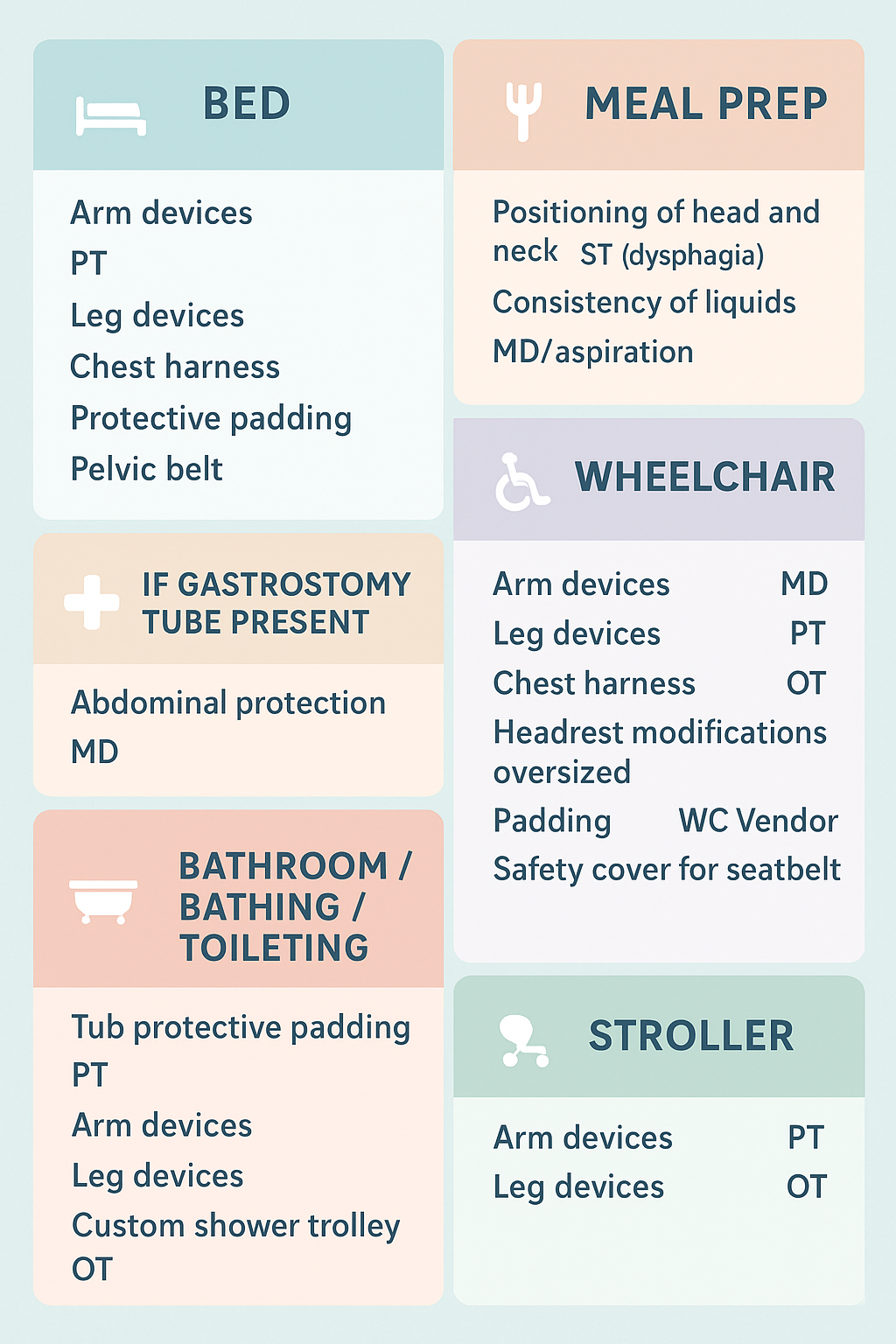
Caring for someone with Classic Lesch-Nyhan often means finding the right tools, protective devices and equipment to support safety, comfort, and daily routines. We’ve grouped these tools by category and included information on who can help you access them—whether that’s a doctor, therapist, or another professional.
Each item is meant to make day-to-day care safer and more manageable, with some families also adapting simple materials at home to meet their child’s specific needs.
Tools That Help Keep Our Loved Ones Safe
-
Medical Doctor (MD / Pediatrician / Specialist)
Definition: Medical doctors provide overall health care, manage medical conditions, and coordinate specialist care. For Lesch-Nyhan, this often includes neurologists or geneticists.
Role in Equipment & Safety:
Evaluates the patient’s overall medical status and needs
Prescribes durable medical equipment, braces, and protective devices
Monitors safety and effectiveness of devices and recommends adjustments as the child grows
-
Speech-Language Therapist (Speech Therapist)
Definition: A speech-language therapist specializes in helping individuals communicate effectively, including those who use augmentative and alternative communication (AAC) devices.
Role in Equipment & Safety:
Evaluates communication needs and abilities
Recommends AAC devices (from low-tech boards to high-tech speech-generating systems)
Suggests modifications or supports to ensure safe and effective use of communication equipment
-
Physical Therapist (PT)
Definition: A physical therapist focuses on mobility, strength, balance, and overall physical function.
Role in Equipment & Safety:
Assesses posture, movement, and motor abilities
Recommends and adjusts wheelchairs, standers, gait trainers, and mobility aids
Suggests supports and modifications to prevent injury and promote safe, functional movement
-
Occupational Therapist (OT)
Definition: An occupational therapist focuses on helping individuals participate in daily activities, including self-care, play, school, and community life.
Role in Equipment & Safety:
Assesses fine motor skills, hand function, and adaptive needs
Recommends and helps fit equipment such as braces, adaptive utensils, and supportive seating
Advises on padding, positioning, and modifications to reduce self-injury while promoting independence
-
Wheel Chair Vendor
Protective devices and safeguarding equipment should be selected based on each setting, with the appropriate therapist assigned to oversee their use. These devices require daily monitoring to ensure safety and comfort, and a backup option should always be available.
All materials covering padded equipment should be smooth and friction-free to help prevent skin irritation or self-injury from rubbing.
In some cases, equipment may need custom modifications to effectively reduce self-injurious behaviors (SIBs). Families often demonstrate incredible creativity—using items such as pool noodles, foam, yoga mats, and towels—to adapt and create safe, supportive environments for their loved ones.
Protective Devices and Safeguarding Equipment

Use of protective devices or safeguarding equipment
Gary Eddey, MD, ScM(HYG), Kelly Henry, MSW
Individuals with Classic LND both require and desire the use of protective devices. The goals for the use of devices are to
1) provide comfort to the patient and
2) prevent self-injury and irreversible harm.
3) Safe participation in physical activities (i.e. Special Olympics).
They do not want to hurt themselves, or others, and know that they will if allowed to do so. Individuals with Classic LND become anxious and fearful when left unprotected.
Damage to the mouth and face from teeth is a central form of self-injury; it does not respond adequately to the use of oral devices, and the standard of care is to remove the teeth as soon as this pattern of injury is identified. The devastation that can occur to the face using the teeth to self-injure warrant an alert to physicians.
The Joint Commission accepts that in LND protective devices are enabling because they prevent self-injury and reduce stress and the fear of self-injury. The Joint Commission and the Center for Medicare and Medicaid Services (CMS) have exempted these safeguarding devices from their standards regarding the writing of PRN orders for restraints. Because these devices look like restraints, the exception to the standard/rules was written into the Joint Commission manuals, but only for individuals with Lesch Nyhan syndrome. Hence, this standard of care has been adopted by every state CMS office. School systems concerned with the use of these devices should be directed to the CMS and Joint Commission regulations and standards. With time individuals with LND may learn to direct the application of their own protective devices.
To find out about Joint Commision Regulations page adopted by your state on protective devices Google CMS (your State) “exceptions to the restraint rule” Lesch Nyhan.
Centers for Medicaid and Medicare Services PDF page 71405

Augmentative and Alternative Communication (AAC)
Augmentative and Alternative Communication (AAC) includes all the ways a person can share thoughts, needs, and feelings without using spoken words. These tools can make a big difference for individuals who have difficulty speaking, helping them connect, express themselves, and be understood.
AAC can look different for everyone. Some people use simple tools, while others use advanced technology. A speech-language pathologist or communication specialist can help determine what type of AAC works best for each person.
No-tech / low-tech options include:
Gestures and facial expressions
Pointing to photos, symbols, or written words
High-tech options include:
Communication apps on tablets or iPads
Speech-generating devices
Eye gaze communication systems
Because individuals with Classic Lesch-Nyhan may also use AAC in ways that reflect emotional or behavioral challenges—such as indirect or outward aggression, self-sabotage, manipulative behaviors, diversion or disruption, lying, or exaggeration—it’s important to remember that these actions often come from frustration or difficulty regulating emotions.
With consistent support, understanding, and positive strategies, families and therapists can help ensure AAC remains a tool for communication, confidence, and connection.
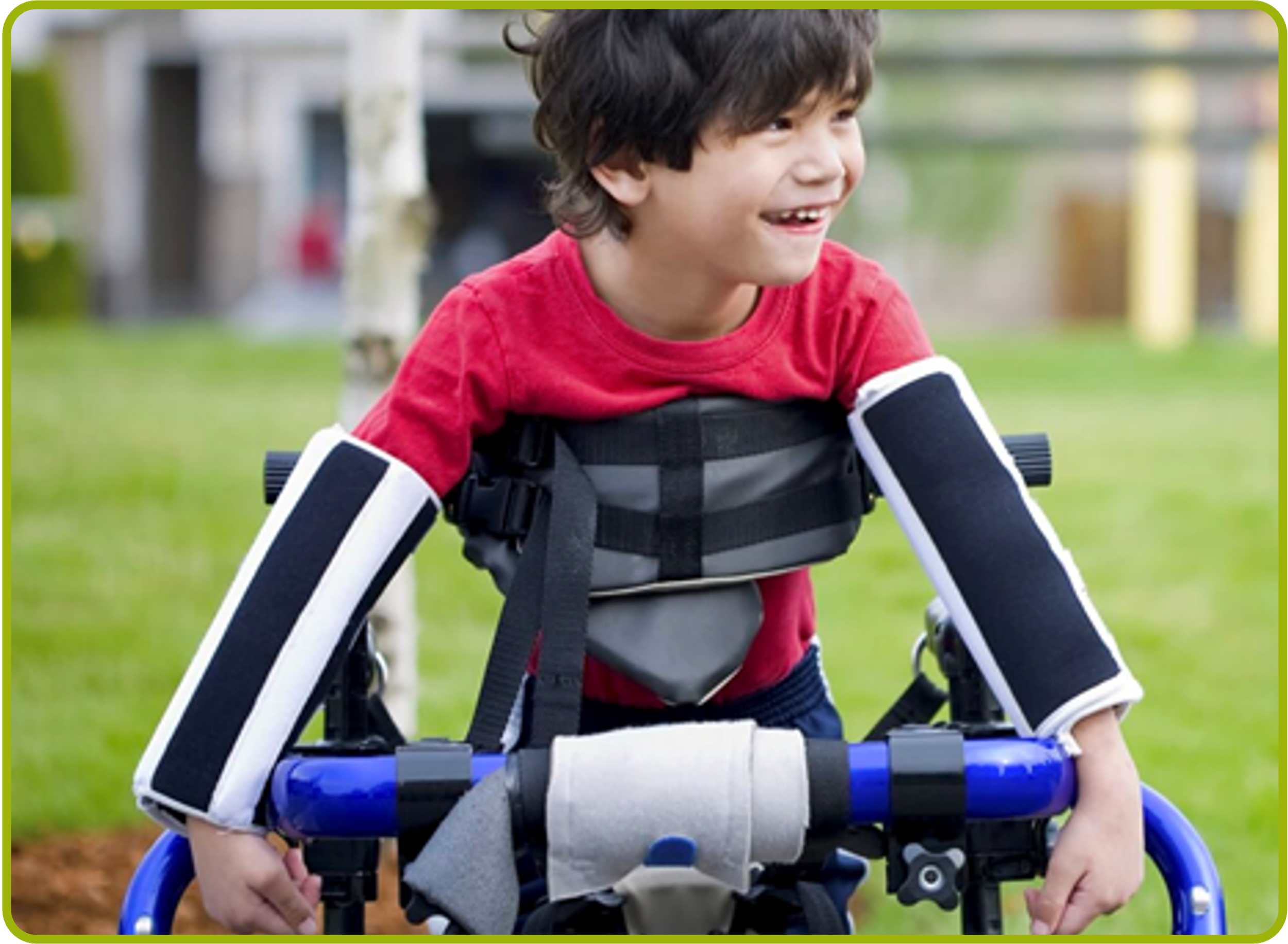
Protective Devices
Protective devices can play an important role in keeping your child safe and preventing self-injury. These tools are used to reduce harm while still allowing for comfort, movement, and participation in daily activities. Always work with your care team to find options that are best suited for your child’s needs and comfort.
Common protective supports may include:
Elbow immobilizers – to limit arm bending that can lead to self-injury
Wrist immobilizers – to reduce the ability to bring hands to the mouth or face
Padding on wheelchairs or seating areas – to cushion and prevent impact
Leg restraints – to limit harmful kicking or sudden movements
Mouth guards – to protect teeth, lips, and tongue
Helmets – to prevent head injury during involuntary movements
Protective equipment should always be used under the guidance of a therapist or healthcare professional, and checked regularly to ensure comfort, safety, and proper fit. Families and caregivers should also monitor devices each day to make sure they remain effective and comfortable for the child.

Durable Medical Equipment
Durable medical equipment helps support comfort, safety, and mobility in daily life. These tools can make everyday activities—like moving, sitting, bathing, or sleeping—safer and more comfortable for individuals with Lesch-Nyhan.
Every child’s needs are unique, so it’s important to work with your care team or physical and occupational therapists to determine what equipment will be most helpful.
Common types of durable medical equipment include:
Wheelchair – for safe and supported mobility
Stander – to help promote bone and muscle health by supporting upright posture
Gait trainer – to assist with supported walking and strengthening
Activity chair – for positioning during play, therapy, or mealtimes
Bath or shower chair – for safe bathing and ease of care
Toilet chair – to support comfort and safety during toileting
Adaptive stroller – for mobility and community outings
Orthotic braces (hands and feet) – to help with alignment and positioning
Hoyer lift or transfer system – to assist caregivers with safe transfers
SleepSafe® bed or similar system – to provide a secure and comfortable sleep environment
Foot and arm braces – for protection and support
Your medical team or equipment provider can help you explore funding options, fittings, and adjustments to ensure each device meets your child’s needs and provides both safety and comfort. Many families find that insurance, Medicaid waivers, or nonprofit organizations can help cover part or all of the cost of durable medical equipment.

Equipment Modifications and Safety Additions
Protective devices and safeguarding equipment should be selected based on each setting, with the appropriate therapist assigned to oversee their use. These devices require daily monitoring to ensure safety and comfort, and a backup option should always be available.
All materials used for padded equipment should be smooth and friction-free to help prevent skin irritation or self-injury from rubbing.
In some cases, equipment may need additional modifications to help prevent self-injurious behaviors (SIBs). Families often show remarkable creativity in finding practical, effective solutions—using simple materials to add extra protection and comfort.
Common caregiver adaptations include:
Pool noodles – to soften hard edges or create protective barriers
Foam padding – for cushioning around chairs, wheelchairs, or tables
Yoga mats – to line surfaces or create soft, safe spaces for movement
Towels – for quick, flexible padding or positioning support
Pillows – for comfort, positioning, or gentle support in resting areas
Headrest extensions – to provide added stability and prevent impact
Every adaptation—no matter how simple—can make a meaningful difference in safety, comfort, and peace of mind. Always consult with your therapy team before making modifications to ensure that they meet your child’s specific needs.
Families are often the best innovators—if you’ve found creative ways to adapt or modify equipment safely, Love Never Sinks would love to hear your ideas and share them with the community.

Daily Use Equipment
The following equipment is commonly used to support comfort, safety, and independence for individuals living with Lesch-Nyhan disease. Each piece can be customized to fit your child’s needs. Always consult with your physical therapist or Durable Medical Equipment (DME) provider to find the right options and supports.
Wheelchair
Essential for mobility and safety, wheelchairs come in many sizes and may include:
Headrest
5-point harness
Lateral supports
Leg restraints
These features help ensure stability, proper posture, and protection from self-injury.
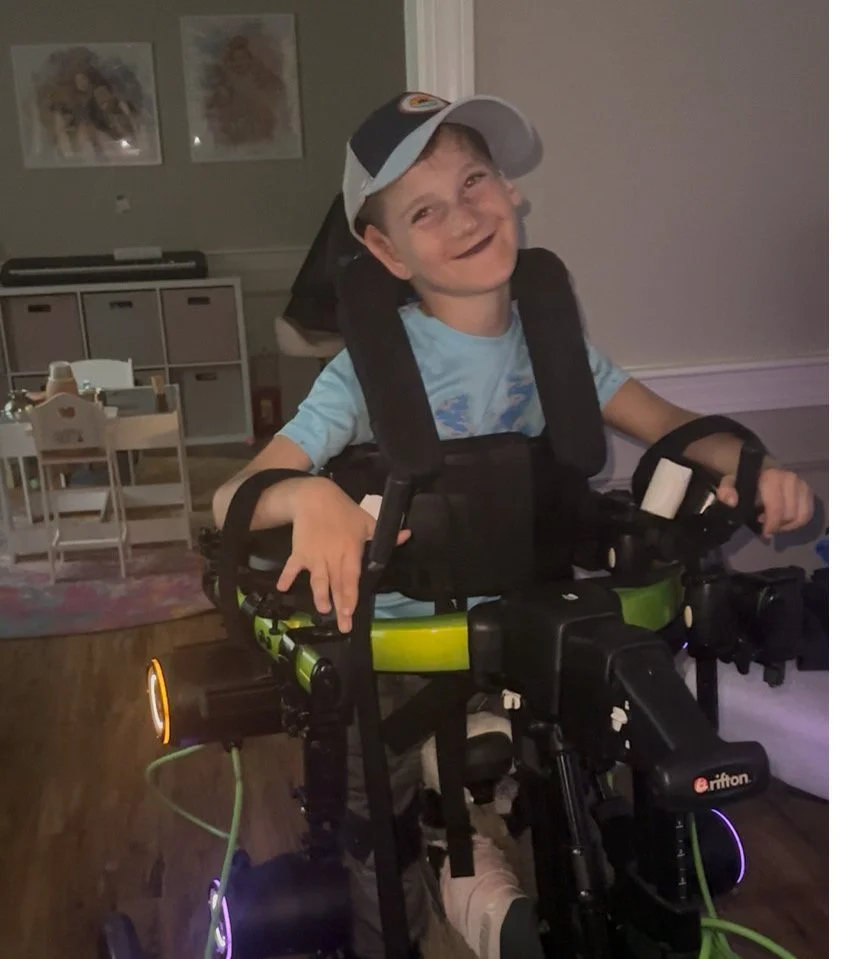
Stander
A stander helps your child safely maintain a standing position. Benefits include:
Improved bone density
Support for skeletal development
Enhanced head and trunk control
Proper hip alignment
Gait Trainer
A gait trainer provides supported movement for children with limited mobility due to muscle control challenges. It can:
Increase independence
Improve balance and coordination
Build muscle strength
Bath/Shower Chair
Specialized chairs provide safe bathing as your child grows. Features may include:
Headrests
5-point harnesses
Additional supports as needed
Your physical therapist or DME provider can help you choose the best option.
Foot & Arm Bracing
AFO (Ankle-Foot Orthosis): Supports weak muscles, reduces spasticity, and keeps feet and ankles aligned.
Elbow Immobilizer: Helps prevent self-injury by limiting arm movement.
Footwear
BILLY Footwear: Adaptive shoes with zippers along the side and around the toe, allowing easy access over an AFO and secure closure.
EazyHold
Soft silicone grips attach to everyday items (utensils, toothbrushes, crayons) to make holding and using them easier for children and adults.
Elbow Immobilizers
Used to prevent hands from reaching the mouth or face during self-injury, providing gentle reminders to keep arms safe.
Everyday equipment can make life safer, more comfortable, and more manageable. Even small adaptations—like cushions, grips, or braces—can make a big difference in independence, confidence, and peace of mind for both your child and your family.
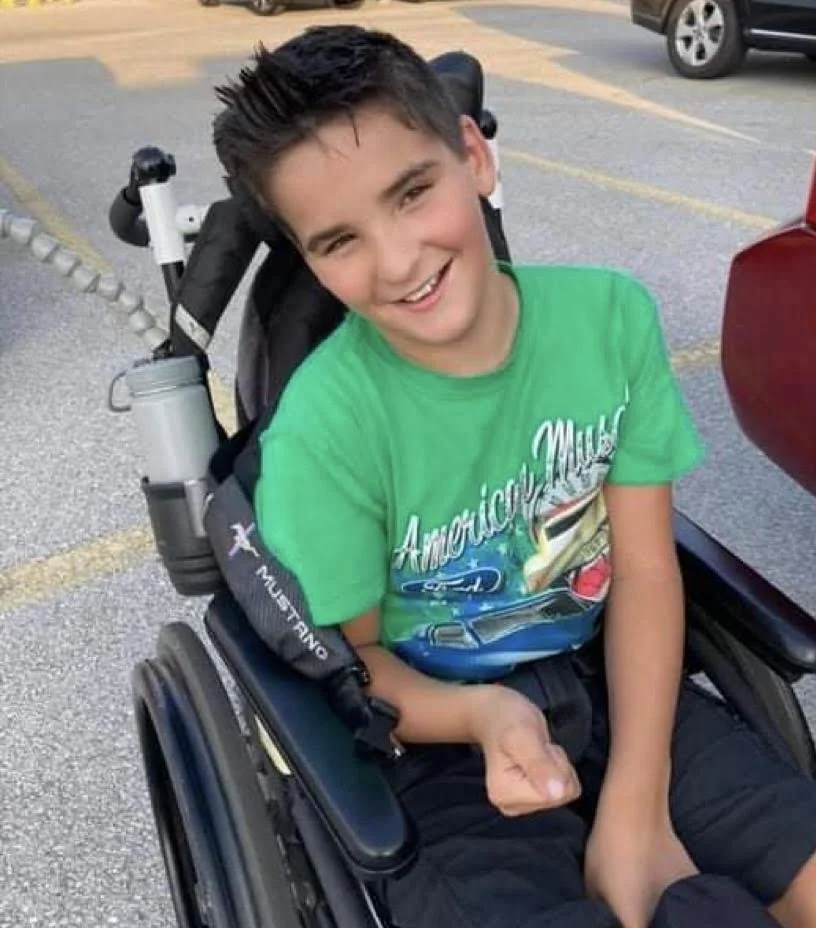

ACC Devices
-
LAMP Words for Life® LAMP Words for Life® is structured to enable early success and allow the client's vocabulary and communication skills to grow in a way that doesn't require re-learning along the way. Because this is a pre-programmed vocabulary program, Words for Life doesn't require extensive customization.
-
Tobii Dynavox US: Assistive communication solutions Tobii Dynavox is a global, full-service provider of groundbreaking communication solutions for people with disabilities. Our solutions are purpose-built for AAC (augmentative and alternative communication) yet designed to be customized. This makes it possible for clinicians to set goals for their clients and adapt our assistive communication solutions to meet their changing needs over time.
Bed/Sleeping Systems
-
Creative Care Beds Our products have provided soft, safe spaces for sleep and play for many autistic adults and children and have also been used for people with challenging behavior and many other conditions.
-
SleepSafe Bed - The Safety Bed - Sleep Safe! We want your loved one to rest and sleep in a safe and comfortable environment. As we designed the SleepSafe® Bed, we listened to the advice from therapists and caregiving professionals who defined the needs of their clients with Special Needs, particularly those in need of complex rehab and care.
SleepSafe® Safety Beds, for insurance purposes, are considered as durable medical equipment. Feel free to call us at 866-852-2337 to discuss your choices or to proceed with the process of purchasing a SleepSafe® Bed through your Durable Medical Equipment (DME) provider.
Care Items
-
Amazon.com: Matz Mini Terry Towel Slip On Baby Bibs | Full Coverage | Ultra Absorbent 100% Cotton | Pullover For Babies And Toddlers | Feeding Drooling And Teething | Unisex Baby Bib With Soft Ribbed Neck : Baby
-
Daily living eating aids and adaptive utensil holders EazyHold
EazyHold offers innovative, highly adaptive products that enhance independence and promote self-expression for individuals with disabilities or limited mobility. Their exceptional customer service, quality craftsmanship, and thoughtful designs consistently exceed customer expectations, fostering a loyal and appreciative user community.
Links to Clothing Manufacturers
-
Billy Shoes are particularly designed for children who wear AFOs, offering features that make shoeing up and down easier and more comfortable. The shoes feature a zipper that runs along the side and around the toe, allowing the shoe to open wide for easy on and off, even with the added bulk of AFOs. This design promotes independence, making it simpler for children to put their shoes on and take them off themselves. Additionally, Billy Shoes come with removable insoles, providing extra space for AFOs, which allows for a more customized fit. These shoes are a favorite among both kids and parents, offering a blend of fashion and function that is both stylish and practical.
Links to DME Manufacturers
-
-
-
Extreme Motus | All-Terrain Wheelchairs Built in Utah and trusted worldwide, Extreme Motus creates industry-leading all-terrain wheelchairs engineered for performance, comfort, and confidence. Every chair is hand-crafted to go where others can’t — from trails to beaches to snow.
-
-
Featuring items like an adaptive bicycle, each Freedom Concepts product is thoughtfully designed, and hand built to accommodate the needs of individuals living with limited mobility.
-
Leckey | Home | Products for Children with Additiona.... Through early intervention, childhood right up to adulthood, our experienced team of designers and clinicians work together with our family of experts to develop exciting innovative products that make a real difference to the quality of life for children and their families.
-
-
R82 Innovative pediatric solutions adapted to the needs of the individual and the caregiver, providing support and promoting participation in daily activities.
-
-
Tadpole Adaptive | MobilityFunder® - Adaptive Gear for Kids & Adults
Links to Protective Devices
Play/Games
-
Overjoyed Accessible Gaming — Our Odyssey Overjoyed is a $5 Microsoft Store accessibility app for playing video games on PC, Nintendo Switch, Xbox Game Pass, and PlayStation Plus Premium using only mouse or eye gaze hardware.
Have a creative setup, homemade device, or adaptive tool that makes life a little easier? We’d love to see it! Sharing photos of what works for you can make a real difference for others walking a similar path. Whether it’s a clever wheelchair modification, a custom-built support, or a simple everyday solution, your ideas can spark inspiration and hope for other families. Every shared photo helps build a community of learning and support—showing that together, we can make the journey a little smoother for everyone.
